

Authorship Criteria: Who Deserves to Be an Author
Introduction
In medical and research writing, an essay on authorship criteria is not just about names on a paper. It is about credit, responsibility, and trust. Misplaced authorship can damage collaboration, publication ethics, and even careers. For medical students, physicians, and researchers, knowing who truly deserves authorship is essential before submission. Authorship should reflect real intellectual and practical contribution, not rank, courtesy, or seniority.
1. What Authorship Really Means
1.1 Credit and responsibility
Authorship is not a reward for being involved in a project. It means taking public responsibility for the work. In scientific publishing, the author is expected to stand behind the data, the interpretation, and the final manuscript.
This is why authorship matters so much in an essay on publication ethics. A name on the paper signals both contribution and accountability. If the paper is questioned later, authors should be able to explain what they did and defend the integrity of the study.
1.2 Why authorship disputes happen
Authorship conflicts often arise when contribution is unclear. Some researchers assume that funding alone earns authorship. Others think that collecting samples, offering supervision, or providing lab access is enough.
These assumptions create tension. To avoid conflict, the team should agree on roles early. Authorship should be discussed before the project is finished, not after the manuscript is ready. That is one of the simplest ways to prevent disputes.
2. Core Authorship Criteria
2.1 Substantial contribution is the foundation
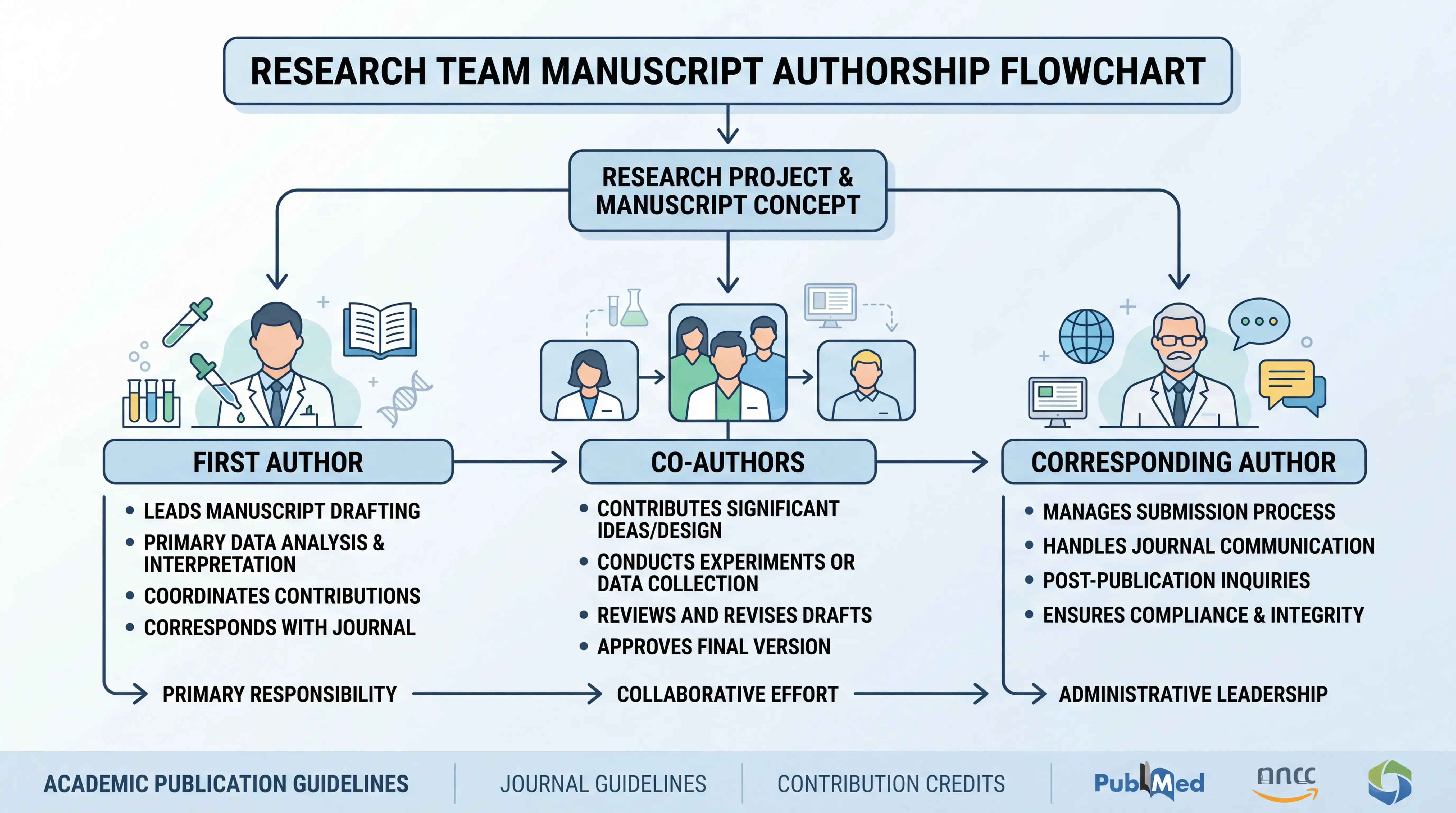
Most journals and editorial standards require more than general involvement. A true author usually contributes to several key parts of the work. These may include:
- study design or research conception
- data acquisition, analysis, or interpretation
- manuscript drafting or critical revision
- final approval of the version to be published
A person who only provided materials, routine supervision, or administrative help is usually not enough for authorship. Such contributors are better acknowledged in the acknowledgments section.
2.2 Final approval matters
A real author must read and approve the final manuscript. This is important because authors are responsible for what is published under their names. If someone has not reviewed the final version, it is difficult to say they fully accept the content.
Final approval is not a formality. It is a basic authorship requirement. In a serious essay on authorship, this point must be clear. Publication is a public act. Every listed author should know exactly what they are signing.
2.3 Accountability is part of the role
Authors are expected to answer questions about the work. They may not be responsible for every detail, but they should know who handled each part. This is especially important in clinical research, where ethical approval, patient consent, and methodological clarity all matter.
When a paper is submitted, authors should be able to explain:
- who designed the study,
- who collected the data,
- who performed the analysis,
- who wrote the first draft,
- who approved the final manuscript.
This transparency protects both the paper and the research team.
3. First Author, Corresponding Author, and Shared Authorship
3.1 First author is usually the main contributor
The first author is generally the person who did the largest share of the hands-on work and writing. In many biomedical papers, the first author is the primary executor of the study and often the main drafter of the manuscript.
That is why first author status carries strong academic value. It often matters in hiring, promotion, grant review, and residency or fellowship applications. For young researchers, it is often the most visible proof of independent contribution.
3.2 Corresponding author carries leadership and responsibility
The corresponding author is usually the person who oversees the project, communicates with the journal, and handles post-publication questions. In many cases, this is the senior investigator or principal supervisor.
The corresponding author is often the highest-responsibility author, not necessarily the largest hands-on contributor. This role is important because it connects the study team, the journal, and future readers.
3.3 Shared first authors and shared corresponding authors
Some journals allow co-first authors or co-corresponding authors. This can be appropriate when contributions are genuinely comparable. But the decision should be based on real work, not politics.
A practical rule is simple:
- use shared authorship only when contribution is truly equivalent,
- document each person’s role clearly,
- make sure all authors agree before submission.
If the contribution is unequal, shared authorship can confuse readers and weaken trust. Clear records help prevent this problem.
4. What Does Not Usually Qualify as Authorship
4.1 Funding alone is not enough
Providing funding is valuable, but it does not automatically make someone an author. Some funders may also contribute intellectually and deserve authorship. Others may only support the project financially.
The key question is contribution to the research itself. Money alone does not establish authorship criteria.
4.2 Routine technical help is often not enough
Lab technicians, data entry staff, or assistants may play important roles, but their work may still fall short of authorship if they did not contribute intellectually or to the manuscript.
They should not be excluded from recognition. They should be acknowledged properly. But acknowledgment is not the same as authorship.
4.3 Seniority or friendship is not a valid reason
A department head, mentor, or collaborator should not be added simply because of rank or relationship. Authorship based on hierarchy weakens the credibility of the paper.
In an evidence-based field, contribution should outweigh status. That principle protects fairness and scientific integrity.
5. Practical Ways to Prevent Authorship Conflict
5.1 Set authorship rules early
The best time to discuss authorship is at the start of the project. Teams should agree on expected roles, review points, and approximate author order. These details may change as the study develops, but the initial discussion creates structure.
5.2 Keep contribution records
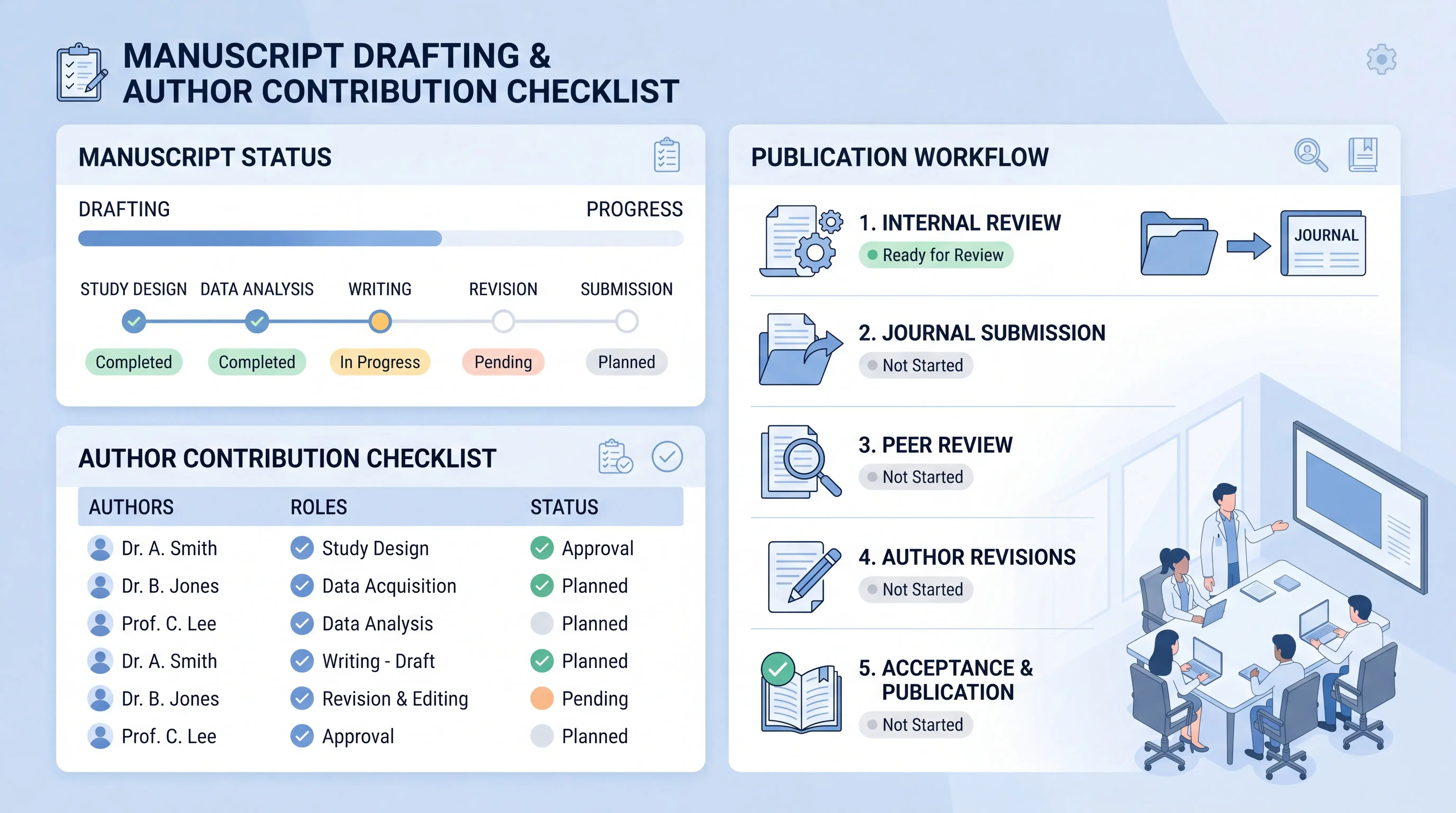
A simple contribution log can reduce conflict. Record who did what in:
- study design
- data collection
- laboratory work
- statistical analysis
- drafting
- revision
- final approval
This documentation helps when authorship needs to be justified to coauthors, institutions, or journals.
5.3 Use journal standards and submission forms
Many journals now ask for contribution statements. These are not decorative. They force the team to describe authorship honestly and precisely.
For medical students and researchers, this is especially useful. A contribution statement can clarify why a person is listed as first author, coauthor, or corresponding author.
6. Why Authorship Ethics Matters for Medical and Research Careers
6.1 Authorship affects academic evaluation
In many institutions, authorship is tied to promotion, scholarship, and funding opportunities. A first-author paper may carry much more weight than a middle-author listing. That is why authorship disputes can become highly sensitive.
An ethical approach protects long-term credibility. A short-term gain from improper authorship can lead to serious damage later.
6.2 Authorship affects trust in the paper
Readers, reviewers, and editors use authorship to judge responsibility. If the author list looks inflated or unclear, confidence drops. That can affect peer review, publication, and citation.
Good authorship practice supports better science. It makes the paper more transparent, more defensible, and more respected.
6.3 Authorship culture shapes the next generation
Medical students and young doctors learn authorship habits from the environment around them. If they see unclear credit or honorary authorship, they may assume it is normal. If they see strict, fair criteria, they learn professionalism.
That is why this topic matters beyond a single manuscript. It shapes research culture.
7. How scifocus.ai Can Help
If your team struggles with authorship planning, manuscript structure, or contribution clarity, scifocus.ai can help streamline the writing process. It supports organized academic drafting and can help researchers move from data to publication more efficiently.
For busy clinicians and researchers, this matters. Clear writing saves time. Better structure reduces revision cycles. And when the manuscript is cleaner, it is easier to define who contributed to each part.
Using scifocus.ai alongside a clear authorship discussion can make the publication process more efficient, more transparent, and less stressful.
Conclusion
Authorship is not a title to distribute casually. It should reflect real intellectual and practical contribution, final approval, and responsibility for the published work. For medical students, physicians, and researchers, the safest approach is simple: define roles early, document contributions, and follow journal standards carefully. If you want a more efficient and structured manuscript workflow, explore scifocus.ai as a practical support tool for academic writing and publication preparation.
Did you like this article? Explore a few more related posts.
Start Your Research Journey With Scifocus Today
Create your free Scifocus account today and take your research to the next level. Experience the difference firsthand—your journey to academic excellence starts here.