
Allusion vs. Illusion
Introduction
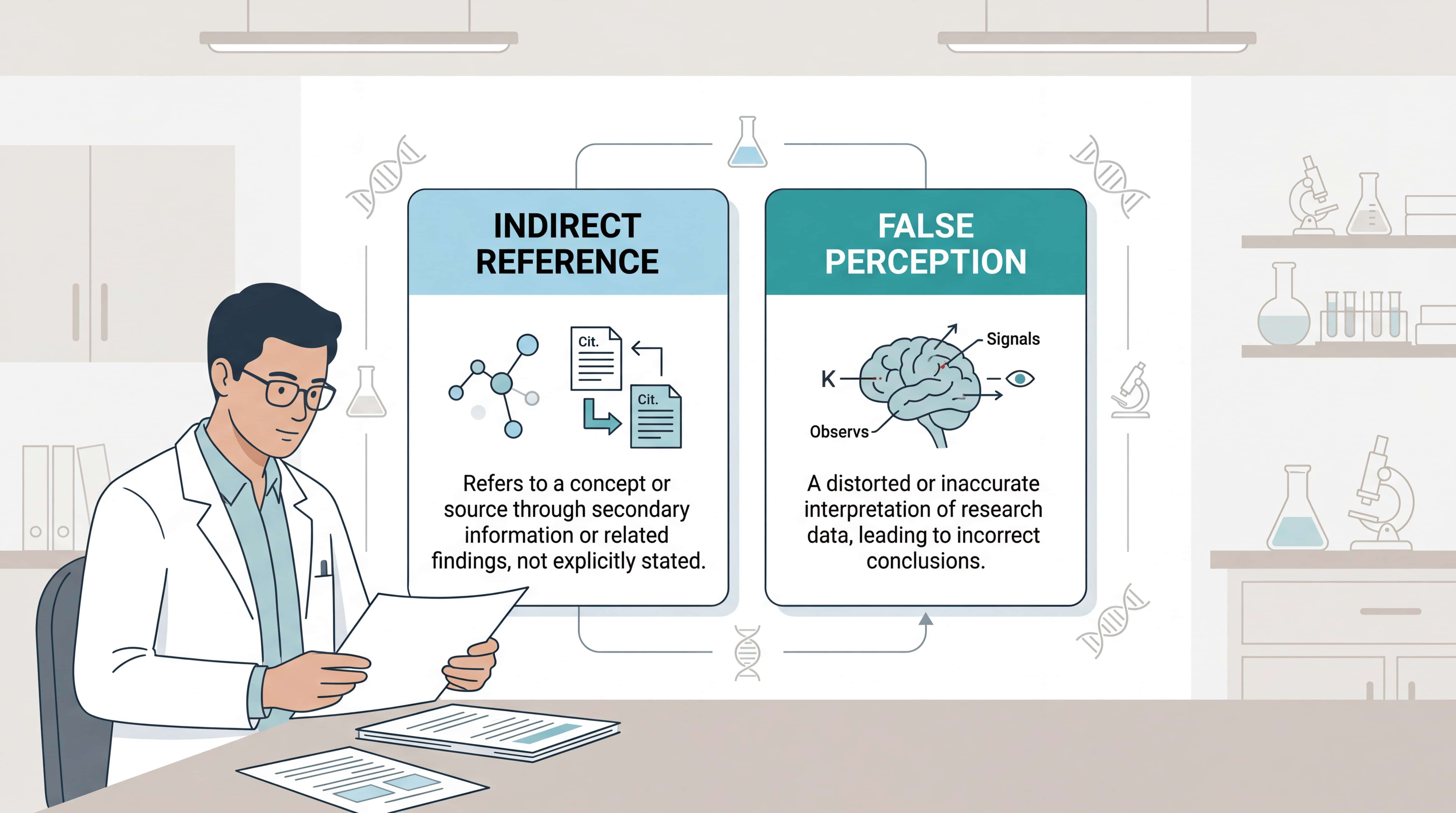
Essay writing in medicine and research demands precision. A single wrong word can weaken credibility, confuse readers, or change meaning. That is why the difference between allusion and illusion matters. In an academic essay, these two terms are often mixed up because they sound similar. Yet they serve very different purposes. Allusion refers to an indirect reference, while illusion refers to a false perception or deceptive appearance.
1. What Allusion Means in Academic Writing
1.1 A precise indirect reference
An allusion is a brief, indirect reference to a person, text, event, or idea. It assumes the reader will recognize the connection. In an essay, this can add depth, context, and authority without long explanation.
For example, a researcher might write that a clinical challenge is “a modern Pandora’s box.” That is an allusion. It points to a known idea from mythology and adds meaning efficiently.
In academic writing, an allusion works best when it is clear, relevant, and culturally appropriate. If the reader cannot identify the reference, the effect is lost.
1.2 Why allusion appears in essays
Allusions are common in literature, speeches, and analytical essays. They help writers connect new ideas to familiar concepts. For medical students and doctors, this can be useful when writing reflective essays, humanities papers, or public-facing commentary.
Common uses include:
- Adding emphasis without extra explanation
- Creating a memorable comparison
- Linking a current issue to a historical or cultural reference
A strong allusion should support the argument, not distract from it. In scientific writing, use it carefully. Formal journal articles usually favor direct language over literary references.
2. What Illusion Means and Why It Causes Errors
2.1 False appearance, not reference
An illusion is something that looks real but is not, or a mistaken perception of reality. It may be visual, psychological, or conceptual. This is the exact opposite of allusion in meaning.
For example, saying “the rapid recovery was an illusion” means the improvement seemed real, but it was deceptive or temporary. In clinical and research settings, this distinction is important because precision affects interpretation.
An illusion can describe a misleading impression in data, diagnosis, or patient expectations. That makes it highly relevant to medical and research communication.
2.2 Common misunderstandings in essays
Writers confuse the two words because they share similar spelling and pronunciation. But their meanings are unrelated.
A simple comparison helps:
- Allusion = indirect reference
- Illusion = false perception
In an essay, using one instead of the other can produce a serious meaning error. If you write, “The author made an illusion to history,” the sentence is incorrect. The correct word is allusion.
For students and researchers, this is more than a vocabulary issue. It affects accuracy, grading, and professional trust.
3. How to Use the Words Correctly in an Essay
3.1 A quick decision rule
When editing an essay, ask two questions:
- Is the sentence referring indirectly to another idea, text, or event?
- Is it describing something misleading, unreal, or falsely perceived?
If the answer to the first question is yes, use allusion. If the answer to the second is yes, use illusion.
This simple rule can prevent a common language mistake in academic and professional writing.
3.2 Examples for medical and research audiences
Here are accurate examples that fit an academic context:
- The article contains an allusion to Hippocrates.
- The diagnostic certainty was an illusion created by limited data.
- The writer used an allusion to highlight ethical responsibility.
- The sense of control during the outbreak was an illusion.
Notice the difference. Allusion connects ideas. Illusion questions reality.
3.3 Editing tip for stronger essays
When reviewing your essay, check every abstract noun carefully. If you are writing about symbolism, literature, or historical reference, allusion may be correct. If you are writing about misperception, bias, or false confidence, illusion is likely correct.
A structured editing process helps:
- Read the sentence aloud
- Replace the word with a plain definition
- Confirm the meaning matches the context
This is especially useful in grant applications, reflective essays, and interdisciplinary writing.
4. Why This Distinction Matters in Professional Writing
4.1 Accuracy builds credibility
In medicine and research, small language errors can affect how readers judge your work. Precision signals competence. When a reader sees correct terminology, they are more likely to trust the author’s analysis.
This matters in:
- Personal statements
- Research essays
- Case reflections
- Editorial commentary
- Academic manuscripts
A wrong word may seem minor, but it can interrupt flow and reduce clarity. In high-stakes writing, that is avoidable.
4.2 Language errors can distort meaning
The difference between allusion and illusion is not cosmetic. It changes the logic of the sentence. One points outward to a reference. The other points inward to a mistaken perception.
For example:
- “The study made an allusion to prior evidence” means it referenced prior evidence.
- “The study created an illusion of certainty” means it gave a misleading impression of certainty.
That distinction is essential when writing an essay that must be both readable and scientifically accurate.
5. Tools and Workflow for Safer Essay Writing
5.1 A practical workflow for busy professionals
Medical students, doctors, and researchers often write under time pressure. That increases the risk of word choice errors. A disciplined workflow reduces mistakes.
Use this process:
- Draft quickly
- Review for meaning, not just grammar
- Check confusing word pairs
- Verify tone and audience fit
- Finalize with a second read
Even a 5-minute review can catch errors that weaken a polished essay.
5.2 How scifocus.ai can help
If you write essays regularly, a strong writing assistant can save time and improve quality. scifocus.ai can support clarity, structure, and revision by helping you identify weak phrasing, inconsistent terminology, and avoidable language errors.
For medical and research users, that means faster editing and cleaner final drafts. It is especially useful when you need to:
- Refine academic tone
- Improve sentence clarity
- Reduce word confusion
- Tighten argument structure
A tool like scifocus.ai does not replace expertise. It helps expert writers work faster and more accurately.
Conclusion
The difference between allusion and illusion is simple, but important. Allusion is an indirect reference. Illusion is a false perception. In an essay, using the correct word improves clarity, protects credibility, and strengthens professional writing. For medical students, doctors, and researchers, that level of precision is not optional. It is part of good communication. If you want to write faster and revise more effectively, explore how scifocus.ai can support your next essay.

Did you like this article? Explore a few more related posts.
Start Your Research Journey With Scifocus Today
Create your free Scifocus account today and take your research to the next level. Experience the difference firsthand—your journey to academic excellence starts here.