
AI Writing Tools for Academic Research
Introduction
Academic writing in medicine and research is demanding. You need clear structure, precise terminology, and low repetition. For many students, clinicians, and researchers, the hardest part is not finding ideas. It is turning evidence into a polished essay that reads naturally, stays accurate, and avoids plagiarism risk. AI writing tools can reduce this friction, but only when they are used with discipline and source awareness.
1. Why AI Writing Tools Matter in Academic Research
1.1 Academic writing is more than sentence generation
Medical and scientific writing requires more than fluent English. It needs correct terminology, consistent logic, and a formal tone. A good essay in this field must also reflect evidence, not just style. That is why generic AI writing tools often fall short. They may produce readable text, but they do not automatically understand scientific nuance, journal conventions, or the need to preserve meaning.
For medical students, doctors, and researchers, the common pain points are clear:
- Slow drafting of introductions and discussion sections.
- Difficulty paraphrasing without changing scientific meaning.
- Repetitive wording that weakens readability.
- Grammar issues that distract reviewers.
- Time pressure before submission.
The best tools do not replace expertise. They support it.
1.2 Where AI adds real value
In academic research, AI can help at several stages. It can speed up literature scanning, suggest sentence patterns, improve grammar, and rephrase text for clarity. It can also help users identify how experienced authors present similar methods or findings. This is especially useful when writing in English is not your first strength.
A practical workflow usually includes three tasks:
- Draft the content from your own research.
- Use AI tools to refine language and structure.
- Check every claim against the original sources.
This approach protects scientific integrity. It also improves efficiency. For busy clinicians and researchers, that combination matters more than raw automation.
2. AI Tools for Literature Search and Academic Phrasing
2.1 Search with purpose, not just keywords
Strong academic writing starts with strong source selection. Tools such as Xiantao Academic and Pepper Assistant can help users search literature and examine how similar ideas are expressed in published work. They are useful when you want to study sentence patterns, terminology, and common structures in a specific field.
For example, if you search a topic such as “m6A expression,” you can review how other authors describe the same concept. This helps you build a more natural essay structure while staying close to field-specific language.
A useful search strategy is simple:
- Use multiple keywords.
- Combine concept, disease, and mechanism terms.
- Search in both Chinese and English when supported.
- Filter by journal type, publication time, or impact-related criteria.
This saves time and improves relevance.
2.2 Phrase banks help with structure
Academic Phrasebank, created from real academic English usage, is especially valuable for non-native writers. It provides models for introductions, source referencing, methods, results, discussion, and conclusions. This is not about copying text. It is about learning how native academic writers frame ideas.
For example, phrase banks help with:
- Introducing a research gap.
- Referring to prior studies.
- Describing methods objectively.
- Reporting results without overclaiming.
- Discussing findings with caution.
These patterns are useful because they reduce guesswork. Instead of forcing every sentence from scratch, you can work from proven academic structures and adapt them to your own data.
2.3 Build vocabulary accuracy with terminology tools
Terminology matters in medicine. One wrong term can change the meaning of an entire paragraph. Tools like Termonline are useful for checking standardized scientific terms quickly. This matters when you are writing an essay that contains pathology, molecular biology, or clinical concepts.
When terminology is consistent, the paper feels more credible. It also reduces reviewer confusion. This is especially important in interdisciplinary work, where one term may have different meanings across fields.
3. AI Tools for Paraphrasing, Polishing, and Rewriting
3.1 Rewriting is not the same as inflating text
Many writers think paraphrasing means changing a few words. In practice, that often fails plagiarism checks or creates awkward sentences. A better method is to rewrite at the sentence level while preserving the original meaning.
NewIdea is one AI tool designed for this task. According to the provided knowledge base, it can process chapters or manuscripts and complete rewriting with a single click. It also includes prompts and a knowledge base, so users do not need to write prompts manually. That makes it practical for researchers who need faster revision without sacrificing quality.
This matters when your essay has high similarity and needs careful restructuring before submission.
3.2 Polishing tools improve fluency, but not logic
NewIdea also offers polishing functions such as rewriting, expansion, shortening, and continuation. Other tools mentioned in the knowledge base include Grammarly, Ginger, Whitesmoke, and Wordtune. These tools are useful for spelling, grammar, style, and sentence-level revision.
However, their limits are important:
- They can correct grammar.
- They can improve phrasing.
- They cannot fix flawed logic.
- They cannot verify scientific claims.
That means AI editing should always come after content validation, not before it.
If you are preparing a clinical or experimental paper, use these tools to sharpen language only after the scientific argument is already sound.
3.3 Use a two-layer review process
A reliable editing workflow is:
- First pass: check structure, logic, and data accuracy.
- Second pass: use AI to improve language, grammar, and flow.
This two-layer method is far safer than relying on automated rewriting alone. It also aligns better with E-E-A-T principles because it keeps expert judgment in the process.
4. Reducing Similarity Without Losing Scientific Meaning
4.1 Plagiarism risk is a real submission barrier
High similarity can lower acceptance rates and may raise academic misconduct concerns. That is why similarity reduction is an essential pre-submission step. In the knowledge base, NewIdea is recommended for one-click reduction, and LibreChat is mentioned as a free alternative for rewriting and polishing.
The goal is not to disguise copied text. The goal is to express your own analysis in original language while preserving the source meaning. For a medical essay, this distinction is critical.
4.2 Practical rules for safe rewriting
To reduce similarity safely, focus on method and message:
- Change sentence structure, not just synonyms.
- Combine short sentences when appropriate.
- Split overloaded sentences for clarity.
- Keep technical terms unchanged when they are standard.
- Recheck citations after rewriting.
This approach helps you avoid accidental meaning drift. It also makes the text easier to read.
Good rewriting should improve clarity first, and similarity second.
4.3 Cite before you polish
AI tools can support wording, but they do not remove the need for citation. Every claim that comes from prior work must still be attributed correctly. This is especially important in review articles, discussion sections, and background paragraphs where source density is high.
If you are writing for a journal, treat citations as part of the argument, not as decoration.
5. A Practical Workflow for Doctors, Students, and Researchers
5.1 A simple 5-step process
For medical learners and research teams, the most efficient workflow is often:
- Define the research question.
- Collect and read key papers.
- Draft the section in your own words.
- Use AI tools to refine language and similarity.
- Verify every citation, term, and claim.
This workflow balances speed and accuracy. It also helps you write a more credible essay because the ideas remain yours.
5.2 Choose tools based on the task
Different tasks need different tools:
- For literature browsing, use structured search and phrase tools.
- For terminology, use standardized databases.
- For grammar, use editing assistants.
- For similarity reduction, use rewriting tools like NewIdea.
- For final review, rely on human expertise.
No single tool can do everything well. The best results come from combining specialized tools with expert review.
5.3 Why SciFocus.ai deserves attention
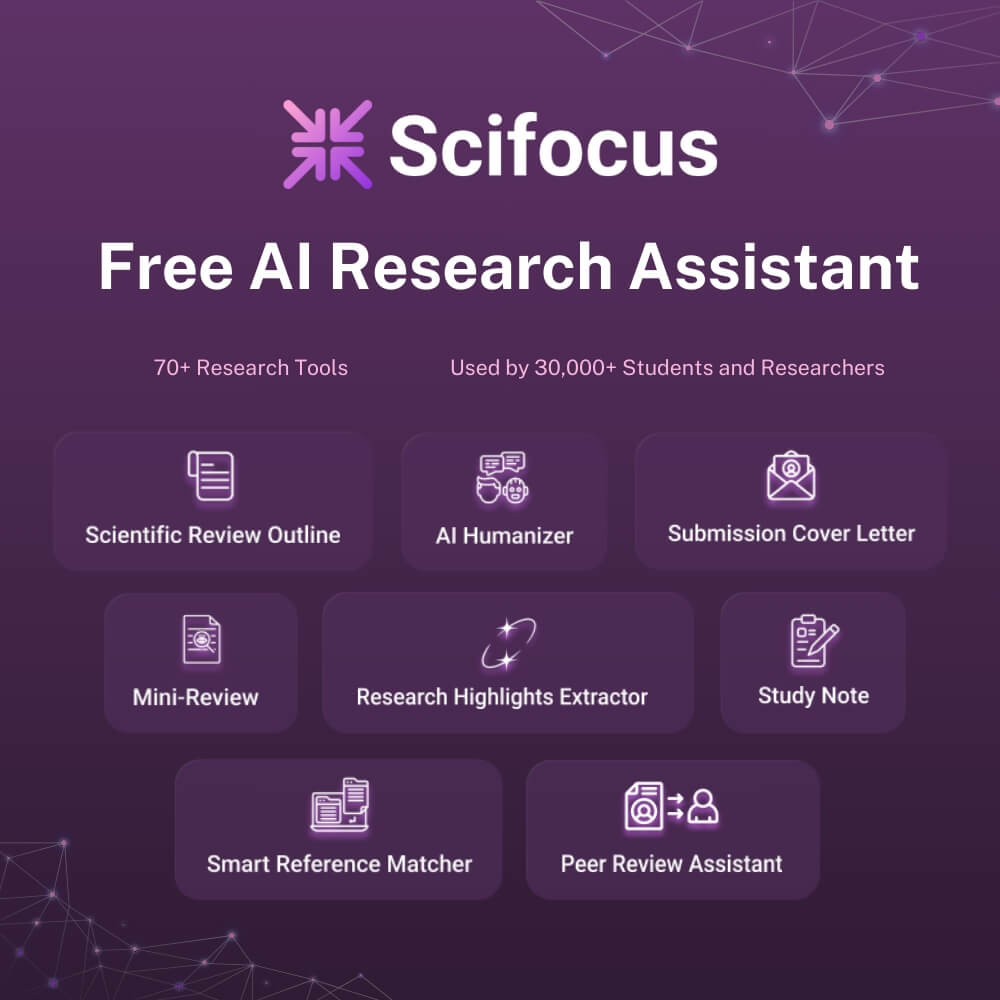
If you want a more streamlined workflow, scifocus.ai can help bring writing, polishing, and academic support into one place. For researchers who need to move quickly from notes to submission-ready text, that kind of integration is valuable.
Instead of switching between multiple platforms, you can reduce friction in the drafting and revision process. That means less time on formatting and more time on scientific thinking. For busy medical professionals, that is a meaningful advantage.
Conclusion
AI writing tools are now a practical part of academic research, but they work best as assistants, not substitutes. For medical students, doctors, and researchers, the key is to use them for search, phrasing, polishing, and similarity reduction while keeping scientific judgment in human hands. A strong essay comes from accurate sources, disciplined rewriting, and careful final review.
If you want a more efficient and research-friendly workflow, explore scifocus.ai. It can help you write faster, polish smarter, and reduce the friction between first draft and final submission.
Did you like this article? Explore a few more related posts.
Start Your Research Journey With Scifocus Today
Create your free Scifocus account today and take your research to the next level. Experience the difference firsthand—your journey to academic excellence starts here.